
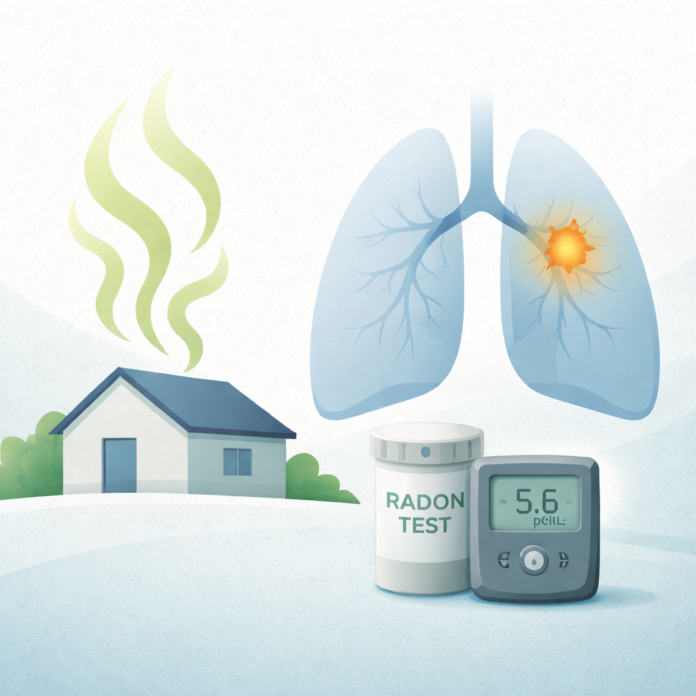
Radon Exposure Symptoms: Can You Feel Radon in Your Home?
One of the most frustrating things about radon is also what makes it so dangerous: you usually can’t feel it. Radon is colorless, odorless, and tasteless, and at levels typically found in homes it does not cause immediate irritation or short-term symptoms. That means you can live with elevated radon for years and feel completely normal—until a serious health problem develops much later.
This article explains what people mean when they search for “radon symptoms,” what symptoms don’t happen, what symptoms might appear years later, and what to do if you’re concerned about exposure.
The most important fact: Radon usually causes no immediate symptoms
Unlike hazards such as carbon monoxide (which can cause headaches, nausea, and dizziness in the short term), radon doesn’t typically trigger noticeable short-term effects. Public health agencies consistently emphasize that radon exposure has no acute or subacute health effects at levels normally encountered in the environment and has no warning signs. In plain English: if you’re hoping your body will “tell you” there’s radon in the home, it usually won’t.
This is why radon is often called a silent risk. The only reliable way to know your exposure level is to test the building where you live or work.
Why people search “radon symptoms” in the first place
When someone types “radon symptoms” into Google, they’re often experiencing a real health symptom—like a persistent cough, chest discomfort, or shortness of breath—and wondering if radon is the cause. It’s understandable, but it’s also where misinformation spreads quickly.
Here’s the reality: radon doesn’t usually cause symptoms until years later, and when symptoms do occur, they’re usually symptoms of lung cancer (or other serious lung disease) rather than unique “radon-specific” symptoms. In other words, radon exposure is not like an allergen or irritant that makes you feel sick right away. Instead, its main proven health effect is long-term: an increased risk of lung cancer.
So what are the “symptoms” of radon exposure?
Strictly speaking, “radon exposure symptoms” aren’t a thing in the short term. But long-term exposure can contribute to lung cancer, and lung cancer can produce symptoms—often later in the disease course. This is why reputable medical sources explain that symptoms from radon exposure may not appear until years later, when cancer symptoms begin to manifest.
Potential symptoms that can be associated with lung cancer include:
- A new or worsening cough
- Shortness of breath
- Chest pain or chest tightness
- Hoarseness
- Coughing up blood
- Unexplained weight loss or fatigue
These symptoms are not specific to radon. They can be caused by many conditions (some minor, some serious). But if you have persistent or worsening symptoms—especially if you smoke or used to smoke—it’s smart to talk to a healthcare professional. Medical evaluation should focus on the symptoms themselves, while radon testing helps determine whether your home environment might be contributing risk over time.
Common myths: symptoms radon does NOT typically cause
Because radon is a radioactive gas, people sometimes assume it causes immediate “poisoning” symptoms. But at residential levels, reputable public health guidance does not support that idea. Radon generally does not cause short-term issues like:
- Headaches
- Dizziness
- Nausea
- Eye or throat irritation
- Sudden asthma-like attacks (from radon alone)
- Fever or flu-like symptoms
If a household is experiencing these kinds of symptoms, it’s worth considering other indoor air quality issues (carbon monoxide, mold, VOCs, combustion appliances, ventilation problems) in addition to radon. Radon is serious, but it’s usually not the explanation for short-term “I feel sick in my house” patterns.
Why radon has no immediate symptoms
Radon’s health risk is largely driven by its decay products (radioactive particles sometimes called radon progeny). When inhaled over a long period, these particles can lodge in the lungs and release radiation that damages lung tissue and DNA over time. That damage can accumulate silently for years. When disease eventually appears, it’s typically the result of long-term biological changes—not an immediate reaction.
This is also why lung cancer is considered the main health outcome definitively linked to radon exposure in major guidance.
Radon + smoking: the “invisible risk multiplier”
Radon raises lung cancer risk for everyone, but the risk becomes much higher for people who smoke. Smoking damages lung tissue and adds carcinogens; radon adds radiation damage over time. The combination is especially dangerous, which is why public health agencies stress radon testing and mitigation as even more important in homes where someone smokes or has smoked in the past.
This is a key takeaway for “symptoms” discussions: a smoker might develop lung cancer symptoms years down the road, and radon exposure can be a major contributor to that risk even if it never caused a single day of noticeable symptoms earlier.
Can a doctor test you for radon exposure?
There isn’t a widely used routine medical test that can tell you “how much radon you’ve breathed” over time in the same way some tests can detect certain toxins or exposures. Some medical resources note that if you think you’ve been exposed, it’s reasonable to discuss your concerns with a clinician—especially if you have risk factors (such as smoking history) or symptoms that need evaluation.
In practical terms, the most actionable “test” is environmental: test your home. If your home tests high, you can reduce exposure going forward through mitigation and then confirm the result with follow-up testing.
What to do if you’re worried about radon
1) Test your home (this is the first move)
Because there are no reliable warning symptoms, testing is the only way to know your radon level. Short-term tests provide a quick snapshot; long-term tests provide a better estimate of average exposure. If results are elevated, mitigation can lower levels.
2) Take action on elevated results
EPA guidance uses an “action level” of 4.0 pCi/L for recommending mitigation, and it also notes that lower levels can still carry risk—so some homeowners consider mitigation even between 2.0 and 4.0 pCi/L, especially when smoking exposure is present.
3) Treat persistent respiratory symptoms seriously
If you have ongoing symptoms like a persistent cough, unexplained shortness of breath, chest pain, or coughing up blood, don’t wait on a radon test result to seek medical care. Those symptoms deserve medical evaluation regardless of the cause. Radon is about long-term risk; symptom evaluation is about what’s happening right now.
Bottom line
If you’re looking for “radon exposure symptoms,” the honest answer is that most people won’t feel anything—even if radon is high. That’s why radon is a stealth risk. Over many years, elevated exposure can increase the risk of lung cancer, and when symptoms appear, they’re usually symptoms of lung cancer rather than something unique to radon. Testing and mitigation are the clearest, most practical ways to protect yourself.
Sources
- U.S. Environmental Protection Agency (EPA) – What are the health effects from exposure to radon? https://www.epa.gov/radon/what-are-health-effects-exposure-radon
- CDC/ATSDR Environmental Medicine (Archived) – Radon Toxicity: Patient Education and Care Instruction Sheet https://archive.cdc.gov/www_atsdr_cdc_gov/csem/radon/patient_education.html
- CDC/ATSDR Environmental Medicine (Archived) – Radon Toxicity: Clinically Assess a Patient https://archive.cdc.gov/www_atsdr_cdc_gov/csem/radon/clinically_assess.html
- CDC/ATSDR Environmental Medicine (Archived) – Radon Toxicity: Potential Health Effects https://archive.cdc.gov/www_atsdr_cdc_gov/csem/radon/health_effects.html
- American Lung Association – Radon https://www.lung.org/clean-air/indoor-air/indoor-air-pollutants/radon
- American Cancer Society – Radon and Cancer Risk https://www.cancer.org/cancer/risk-prevention/radiation-exposure/radon.html
- American Cancer Society – Radon Gas and Lung Cancer (includes symptom discussion) https://www.cancer.org/cancer/latest-news/radon-gas-and-lung-cancer.html
- MD Anderson Cancer Center – Radon exposure and lung cancer: 11 things to know https://www.mdanderson.org/cancerwise/radon-exposure-and-lung-cancer–11-things-to-know.h00-159619434.html
- Cleveland Clinic – Radon Gas: Causes, Exposure, Symptoms & Complications https://my.clevelandclinic.org/health/diseases/21523-radon-gas
- World Health Organization (WHO) – Radon and health https://www.who.int/news-room/fact-sheets/detail/radon-and-health