
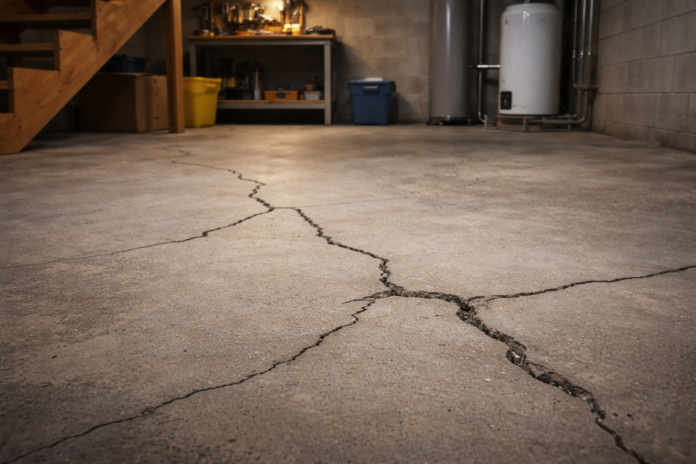
Does Sealing Cracks Reduce Radon?
Sealing cracks in a basement floor or foundation wall feels like the most logical way to reduce radon. Radon comes from the soil, cracks are openings to the soil, so sealing should solve it. In real homes, it usually does not work that cleanly.
Sealing can help in some situations, but for most homes with elevated radon, crack sealing is best viewed as a supporting step, not the primary fix. EPA’s consumer guidance explains that sealing alone has not been shown to lower radon levels significantly or consistently, and it is typically used along with other mitigation methods. EPA: Consumer’s Guide to Radon Reduction (PDF).
This article explains why sealing is limited, when it can help, how to seal correctly if you choose to do it, and what to do instead when radon is truly elevated.
Table of Contents
- Short answer
- Why sealing cracks usually does not solve radon
- When sealing can help
- What to seal (and what people forget)
- How to seal cracks for radon reduction
- Sealing vs active mitigation: what actually works
- Realistic expectations: what sealing can and cannot do
- How to test before and after sealing
- Common sealing mistakes
- FAQs
- Sources
Short answer
Does sealing cracks reduce radon? Sometimes, but usually not enough to rely on as the main solution. EPA says sealing alone has not been shown to lower radon levels significantly or consistently and is typically used in combination with other mitigation methods. EPA Consumer’s Guide (PDF).
When sealing is worth doing: As part of a larger mitigation plan, or when radon is only mildly elevated and you are also addressing the broader air and pressure pathways that drive radon entry.
When sealing is not enough: If your radon is at or above EPA’s action level of 4.0 pCi/L, the reliable path is usually an active mitigation system (most commonly active soil depressurization), not sealing alone. EPA action level guidance.
Why sealing cracks usually does not solve radon
Sealing seems like it should work because cracks are visible. The problem is that radon entry pathways are often not limited to the cracks you can see.
Most basements and slabs have multiple radon entry routes: hairline cracks, control joints, gaps at the slab edge, openings around plumbing penetrations, sump pits, floor drains, hollow block walls, and hidden cavities behind finished walls. Radon is a gas. It will find the easiest route from a higher-pressure region (soil gas) into a lower-pressure region (your home), and those routes are not always obvious.
There is also a physics problem. Even if you seal the visible cracks, your home still creates pressure differences that can pull soil gas in through tiny openings. Stack effect (warm air rising), exhaust fans, fireplaces, HVAC return leaks, and even a dryer can create lower pressure in the lowest parts of a home. Those pressure drivers often matter more than the size of the crack.
That is why EPA does not present sealing as a standalone cure. In its consumer guidance, EPA explains that sealing is a basic part of most radon reduction approaches, but sealing alone is not usually enough for reliable reduction. EPA: Consumer’s Guide to Radon Reduction (PDF).
Think of it this way: sealing is like taping drafts in a home. It can help, but if the pressure and airflow drivers remain, the problem tends to persist in a different form.
When sealing can help
Sealing is not pointless. It is just commonly misunderstood. Here are the scenarios where sealing tends to be most valuable.
1) As a supporting step for active mitigation. Many mitigation systems rely on creating suction beneath the slab. Sealing major openings can help the system work more efficiently and keep conditioned indoor air from being pulled into the mitigation piping. EPA notes that sealing is typically done in combination with other methods. EPA Consumer’s Guide (PDF).
2) When the radon level is only mildly elevated. If your number is close to the “consider action” range and you also improve ventilation patterns or reduce pressure drivers, sealing may contribute to bringing the level down. EPA recommends considering action between 2.0 and 4.0 pCi/L. EPA action level guidance.
3) When the main entry points are obvious and limited. Some homes have an obvious major gap (a sump lid, a large plumbing penetration, an open floor drain). Sealing a few large openings can make a noticeable difference, especially if the home does not have many other pathways.
4) For comfort and moisture benefits. Even if sealing does not dramatically reduce radon, it can reduce drafts, moisture, odors, and insect entry. Many homeowners do sealing for these reasons and treat radon reduction as a possible side benefit.
What to seal (and what people forget)
If you decide to seal, prioritize the biggest and most direct soil-gas pathways first. Many homeowners spend time sealing hairline cracks while ignoring the large openings that matter more.
High-priority items
- Sump pit and sump lid gaps (especially if the pit is open or loosely covered)
- Large floor cracks and control joints
- Plumbing penetrations (gaps around pipes through slab or wall)
- Floor drains (if dry or connected in a way that allows soil gas movement)
- Slab edge gaps (where slab meets wall, including hidden edges behind finished walls)
Often overlooked
- Hollow block wall pathways (radon can move through block cavities)
- Behind-finish cavities (finished basements can hide major gaps)
- Utility chases (openings around HVAC or duct penetrations)
EPA’s reduction guidance emphasizes that radon entry pathways can be numerous and that mitigation methods are designed to address the broader system, not just one crack. EPA Consumer’s Guide (PDF).
How to seal cracks for radon reduction
Sealing for radon is not the same as cosmetic crack filling. You want durable, flexible sealing that can handle seasonal movement and maintain adhesion.
Step 1: Choose the right sealant type for the location.
For many slab cracks and joints, polyurethane or epoxy-based products are common choices, but the right option depends on crack size, movement, and moisture. The most important principle is flexibility where movement exists. Rigid patch materials can crack again and reopen the pathway.
Step 2: Prep matters more than people expect.
Clean the crack or joint thoroughly. Dust and loose concrete reduce adhesion. If the surface is damp or contaminated, the seal may fail. If the crack is wide or deep, you may need a backer rod before sealing to control depth and improve performance.
Step 3: Seal penetrations like a system, not like individual holes.
If you seal around a pipe but leave an adjacent chase open, you may see little change. The goal is to reduce the most direct soil gas pathways, not to make the basement “look sealed.”
Step 4: Do not forget the sump.
A sealed sump cover is one of the most important practical sealing steps in many homes. If the sump is open, it can act as a direct soil gas entry point. Many mitigation systems include sump sealing as a standard element.
Step 5: Treat sealing as part of a “test and verify” process.
Sealing is only useful if it is followed by measurement. If you seal and do not retest, you do not know whether you improved anything.
Sealing vs active mitigation: what actually works
If your radon is elevated, the reliable solution is usually not “seal everything.” It is “control the pressure and exhaust the radon.” That is why active soil depressurization is the most common and effective mitigation method for many homes. EPA describes mitigation approaches and emphasizes that sealing alone is typically not enough. EPA Consumer’s Guide (PDF).
Here is the practical comparison:
| Approach | What it does | Reliability | Best use case |
|---|---|---|---|
| Sealing cracks only | Reduces some entry openings | Often inconsistent as a standalone fix | Mild elevations or supporting role with other mitigation |
| Active soil depressurization | Creates suction under slab and vents radon outdoors | Typically the most reliable method for many homes | Elevated radon, especially at or above 4.0 pCi/L |
| Improved ventilation (selected cases) | Dilutes indoor radon by increasing air exchange | Can help, but depends on climate and home design | Some slab homes or mild elevations with careful design |
If you are at or above 4.0 pCi/L, EPA recommends fixing the home. That recommendation is not “seal cracks until it drops.” It is “use a proven radon reduction method.” EPA action level guidance.
Realistic expectations: what sealing can and cannot do
Here is the realistic way to think about sealing:
Sealing can reduce radon in some homes, but it is rarely enough by itself to reliably bring a high home below 4.0 pCi/L. It is more likely to help when radon is only moderately elevated and the home has a few dominant entry pathways that can be effectively sealed.
Sealing is often worth doing as part of mitigation because it can improve system performance and reduce energy loss. It can also reduce moisture, insects, and musty air, which many homeowners care about regardless of radon.
Sealing is not a substitute for mitigation when radon is truly elevated. If your test result is high, you need a method that deals with pressure and soil gas movement, not just visible cracks.
How to test before and after sealing
If you want to know whether sealing helped, you need a before-and-after measurement plan.
Step 1: Get a baseline. Use a short-term test or a calibrated continuous monitor to establish your starting point. Make sure the test conditions are reasonable and consistent.
Step 2: Seal your targeted areas. Document what you sealed, especially sump and large penetrations.
Step 3: Retest under similar conditions. Radon can vary by season and weather. The most meaningful comparison happens when your follow-up test is conducted in similar conditions to your baseline test. If you want your best year-round estimate, a long-term test is more representative than a short-term test. EPA’s Citizen’s Guide explains that long-term tests are more likely to tell you your year-round average than short-term tests. EPA: A Citizen’s Guide to Radon (PDF).
Step 4: Decide based on the result, not hope. If your number is still at or above 4.0 pCi/L, the next step is mitigation. EPA recommends fixing at that level. EPA action level guidance.
Common sealing mistakes
Sealing hairline cracks but ignoring the sump. An open sump can dominate radon entry in some homes. A sealed sump cover is often a higher-impact step than cosmetic crack filling.
Using the wrong material for moving cracks. If the basement slab shifts seasonally, a rigid patch can reopen. Flexibility matters.
Skipping prep. Dusty cracks and damp surfaces cause seal failure. Prep work is not glamorous, but it is the difference between a real seal and a short-lived patch.
Assuming “sealed” means “fixed.” Without retesting, you do not know whether sealing changed your radon level.
Using sealing as a reason to delay mitigation. If radon is elevated, sealing can be a supporting step, but delaying proven mitigation can keep your exposure higher for longer.
FAQs
If my radon is 5.0 pCi/L, can sealing cracks alone fix it?
It is unlikely to be reliable. EPA states sealing alone has not been shown to lower radon levels significantly or consistently and is typically used with other mitigation methods. At 4.0 pCi/L and above, EPA recommends fixing the home. EPA Consumer’s Guide (PDF) and EPA action level guidance.
Should I seal cracks even if I install mitigation?
Often yes, especially for large openings. Sealing can improve system efficiency and reduce conditioned air loss. Just do not treat sealing as a replacement for active mitigation when radon is elevated.
Can sealing make radon worse?
Sealing usually does not make radon worse by itself, but partial sealing can sometimes shift pressure and airflow patterns in ways that change readings. This is why testing before and after is important. If radon remains elevated, active mitigation is the reliable solution.
What is the best first step if I suspect radon?
Test. Radon is invisible and you cannot guess it. Start with a short-term test if you need quick information, and use long-term testing if you want a better year-round average. EPA Citizen’s Guide (PDF).