
Radon Mitigation in Crawl Spaces: How It Works, What to Expect, and What to Watch For
Crawl spaces are one of the most common places for radon problems to show up. They are in direct contact with the soil, they often have exposed dirt floors, and they can connect to the living space through plumbing penetrations, wiring holes, duct chases, and gaps in the subfloor.
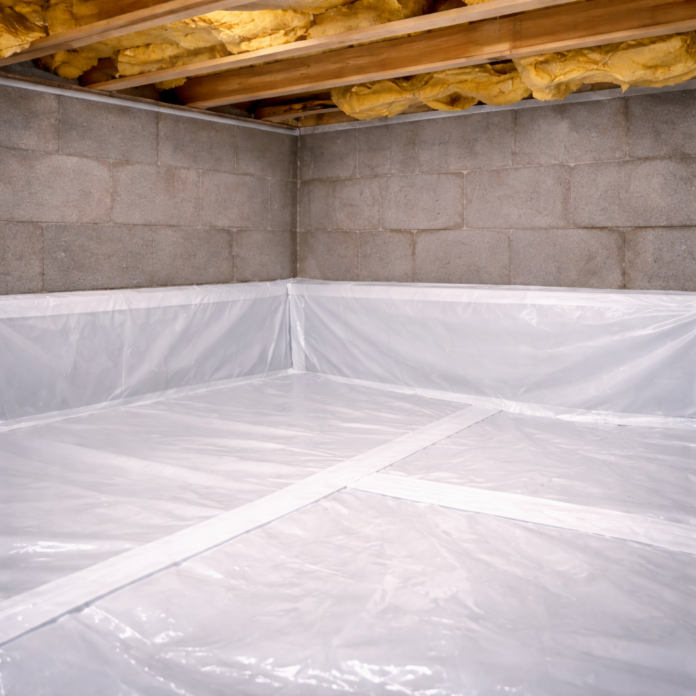
If your radon test is elevated and your home has a crawl space, the mitigation approach looks a little different than a typical basement system. The most effective method usually involves sealing the crawl space floor with a heavy plastic membrane and then using a fan and vent pipe to draw radon from beneath that membrane and exhaust it outdoors. This is commonly called sub-membrane depressurization.
This guide explains how crawl space radon mitigation works, what the main system components are, what a good installation looks like, and the most common mistakes that lead to poor performance.
Why crawl spaces are a common radon entry path
Radon is produced in soil and rock. When your home sits over soil, radon can move upward and enter through openings in the foundation. Crawl spaces often have exposed soil and many air leaks into the home above. Even if the crawl space has vents, radon can still build up and move upward through gaps in the subfloor.
The goal of mitigation is not to chase every small crack. The goal is to control how soil gas moves by creating a predictable path that vents radon outdoors instead of letting it seep into indoor air.
The most effective crawl space method: sub-membrane depressurization
For crawl space homes with an earth floor, one of the most effective approaches is:
- Cover the crawl space dirt floor with a high-density plastic sheet (a soil gas retarder membrane).
- Seal the membrane at seams and edges so soil gas cannot easily leak into the crawl space air.
- Install a vent pipe under the membrane and connect it to a radon fan.
- Use the fan to draw radon from beneath the membrane and exhaust it outdoors.
EPA describes this approach as submembrane suction and notes it is the most effective way to reduce radon levels in crawl space homes when properly applied. CDC also describes covering the earth floor with a high-density plastic sheet and using a vent pipe and fan to vent radon outdoors.
Think of it like this. You are not trying to clean radon out of the crawl space air after it is already inside. You are trying to grab the soil gas before it becomes part of the crawl space air and before it leaks into the living space.
Other methods you might hear about
There are other crawl space approaches. Some can work in certain situations, but they are often less reliable than sub-membrane depressurization.
Crawl space depressurization
This approach draws air directly from the crawl space using a fan. EPA notes this method generally does not work as well as submembrane suction and requires special attention to combustion appliance backdrafting and sealing the crawl space from other portions of the home. It can also increase energy costs due to loss of conditioned air from the home.
Crawl space ventilation
Ventilation can sometimes lower radon by diluting air, but it is inconsistent and can increase energy costs. In colder climates, ventilation can create freezing and moisture issues. CDC also notes that natural ventilation should be considered a temporary strategy, not a true mitigation solution.
Sealing only
Sealing gaps is useful as a support step, but sealing alone is rarely a complete solution for elevated radon. In crawl spaces, you usually need an active system to control soil gas movement reliably.
Key components in a crawl space radon mitigation system
A good crawl space radon system is a collection of parts that work together. Here are the main components you should expect.
1) Soil gas retarder membrane
This is the heavy plastic sheet that covers the crawl space floor. It should be durable enough to survive normal crawl space access and maintenance. A thin sheet that tears easily is one of the most common reasons systems underperform later.
2) Seam sealing and edge sealing
The membrane must be sealed at seams and edges to resist airflow from the soil into the crawl space. ANSI/AARST standards describe sealing seams and edges and sealing around penetrations in a permanent, airtight manner when sub-membrane depressurization is used.
3) Sealing around piers and penetrations
Support piers, plumbing lines, wiring, duct hangers, and other penetrations create paths for leaks. These areas should be sealed so the membrane does not become a loose cover that soil gas can bypass.
4) Suction point under the membrane
The suction point is where air is drawn from beneath the membrane into the vent pipe. ANSI/AARST standards describe extending suction ducting under the membrane and installing it to prevent obstruction of airflow at the inlet. They also include advisory guidance about using perforated pipe under the membrane to prevent the membrane from sealing against moist soil and restricting suction.
5) Vent piping
Piping transports the soil gas from the suction point to the fan and then to the discharge location. Pipe routing matters. Excessive elbows and long runs add resistance and can reduce performance unless the fan is properly matched.
6) Radon fan
The fan runs continuously and creates the suction that makes the system work. Fan selection is based on the resistance of the system and how much suction is needed to influence the entire membrane area effectively.
7) Exhaust discharge
The system must vent outdoors in a way that reduces the chance of radon re-entering the home through windows, doors, or other openings. A properly routed discharge is a core safety feature, not a cosmetic detail.
8) System monitoring or warning device
A warning device helps you know the system is operating. Many systems use a pressure gauge (manometer). If the fan fails, the warning device helps you detect it quickly instead of discovering it months later.
What installation typically looks like
Install details vary by home, but a quality crawl space radon mitigation project usually follows a predictable sequence.
Step 1: Evaluate the crawl space conditions
A contractor should evaluate:
- Size and shape of the crawl space
- Access points and obstacles
- Moisture and bulk water conditions
- Open soil and existing vapor barrier condition
- How the crawl space connects to the home above
If there is standing water, heavy mud, or drainage failures, those should be addressed first. Radon and moisture problems often overlap in crawl spaces.
Step 2: Prep the floor and install the membrane
The floor is cleared of debris and sharp objects. The membrane is laid out with appropriate overlap at seams. Seams are sealed. The membrane is sealed at edges and around piers and penetrations.
Step 3: Install suction under the membrane
A suction pickup is installed under the membrane. Many installers use perforated piping or a matting approach under the membrane to keep airflow pathways open and prevent the membrane from sticking to damp soil and restricting suction.
Step 4: Route piping and install the fan in the correct location
The fan should be installed in an appropriate location outside occupied space. The vent pipe is routed to the exterior discharge point.
Step 5: Add monitoring and label the system
A monitoring device is installed so the homeowner can confirm the system is operating. Labels are added so future homeowners or contractors understand what the piping is for and do not disconnect it by mistake.
Step 6: System startup and initial checks
The contractor starts the system and confirms it is pulling as expected. In many installations, this includes checking pressure readings and ensuring there are no obvious leaks or disconnections.
Moisture and condensation considerations
Crawl spaces are often humid, and soil gas can carry moisture vapor. Moisture matters for two reasons:
- Moisture affects comfort and building durability in crawl spaces.
- Moisture vapor can condense inside radon piping if the system is not installed properly.
National Radon Program Services notes that moisture vapor drawn from beneath a floor can condense and pool inside the ventilation pipe, and pooled moisture in unheated areas can freeze at low temperatures. Good system design and routing help prevent condensation problems that restrict airflow and reduce performance.
A sealed membrane often improves crawl space humidity conditions as a side benefit, but radon mitigation is still the primary goal. Water management and radon management should work together, not fight each other.
After installation: how to confirm it worked
The most important step after installation is testing again. CDC states that after installing a radon reduction system, you should test your home again to make sure it is working, and consider retesting every two years. Retesting is also recommended after remodeling.
A practical verification plan:
- Run a post-mitigation radon test after the system is operating as instructed.
- Keep the result as part of your home records.
- Retest periodically and after major changes, especially if you begin using lower areas more often.
If you also use a digital monitor, keep it in the same location for meaningful comparison before and after the installation. Use long averages, not short spikes, to judge performance.
Common crawl space mitigation mistakes
These issues show up again and again when crawl space systems underperform.
- Thin or fragile membrane: tears lead to leaks and reduced suction control.
- Unsealed seams and edges: the system pulls crawl space air instead of soil gas under the membrane.
- Incomplete sealing around piers and penetrations: soil gas bypasses the membrane.
- No airflow pathway under the membrane: the membrane sticks to damp soil and suction gets blocked.
- Fan installed in a risky location: fan placement should reduce the chance of soil gas leaks impacting living areas.
- Poor discharge location: exhaust too close to windows, doors, or vents increases re-entry risk.
- No monitoring device: fan failures go unnoticed for long periods.
- Skipping post-mitigation testing: you never confirm the system actually reduced radon.
Homeowner checklist when comparing contractor proposals
If you are getting quotes, use this list to keep the conversation grounded in performance and safety.
- Which crawl space method are you proposing, and why is it the best fit for my crawl space?
- What membrane material will you use, and how will seams and edges be sealed?
- How will you handle piers, posts, and penetrations through the membrane?
- How will you prevent airflow blockage under the membrane?
- Where will the fan be installed?
- Where will the exhaust discharge terminate and what openings are nearby?
- What monitoring or warning device is included?
- What is your plan for post-mitigation testing?
Strong contractors can answer these questions clearly without relying on vague assurances.
Bottom line
Crawl space radon mitigation is very effective when it is done correctly. The most reliable approach typically seals the crawl space floor with a high-density plastic membrane and uses a vent pipe and fan to draw radon from beneath the membrane and vent it outdoors.
If you focus on a durable sealed membrane, a properly designed suction pickup under the membrane, correct fan and discharge placement, and post-installation testing, you will avoid the most common failure modes and end up with a system that reduces radon consistently over time.
Sources
- Centers for Disease Control and Prevention (CDC) – Reducing Radon Levels in Your Home
- Centers for Disease Control and Prevention (CDC) – Radon and Your Health
- U.S. Environmental Protection Agency (EPA) – Consumer’s Guide to Radon Reduction (PDF)
- ANSI/AARST SGM-SF – Sub-membrane suction points and sealing requirements
- ANSI/AARST SGM-SF – Membrane seam overlap and sealing guidance
- National Radon Program Services (Kansas State University) – Mitigation Details 101