
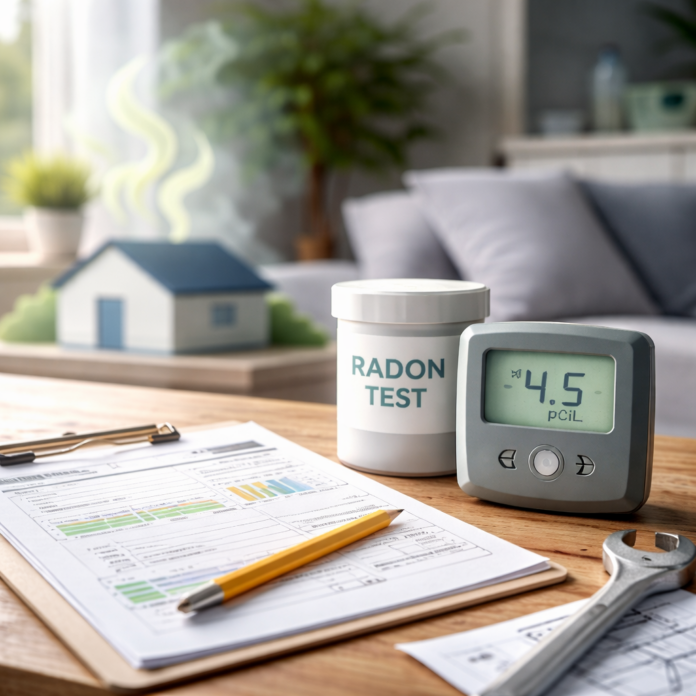
Long-Term Radon Exposure: What It Means, Why It Matters, and How to Reduce Risk
Radon is one of the most important indoor air hazards precisely because it works slowly and quietly. You typically can’t see it, smell it, or taste it. You also usually won’t feel any symptoms from radon exposure in the short term. The danger is what happens after months and years of breathing elevated radon levels inside a home or building.
Long-term exposure is the core reason radon is a public health issue. Radon is widely recognized as a leading cause of lung cancer (especially among people who don’t smoke) and is commonly described as the second leading cause of lung cancer overall. The good news is that long-term exposure is measurable, and in many buildings it’s also reducible with proven methods.
What “long-term exposure” means
When people talk about radon risk, “long-term exposure” generally means your average exposure over time—not a single day or even a single week. Radon levels rise and fall based on weather, seasons, ventilation, and how a building “breathes.” Because of that variation, what matters most for health is typically the long-term average.
In practical home testing terms, a “long-term radon test” usually means a test left in place for 90 days or more. The goal is to estimate your average radon level through changing conditions, which is more representative of true long-term exposure than a short snapshot.
Why time matters: radon risk is cumulative
Radon’s health impact is driven by radiation exposure to lung tissue. Radon gas naturally breaks down into tiny radioactive particles (often called decay products). When you inhale them, they can lodge in the lungs and deliver radiation as they continue to decay. That radiation can damage cells and DNA over time. The longer you’re exposed, the more opportunity there is for damage to accumulate.
This is the key idea: radon is a cumulative risk. A higher level for a longer period creates a higher overall exposure than a lower level for a shorter period. That’s why long-term testing and long-term averages matter so much.
Many public health organizations describe the dose-response relationship as “linear,” meaning lung cancer risk increases proportionally as long-term average radon levels rise. For example, international guidance commonly summarizes this as a measurable percentage increase in lung cancer risk for each incremental rise in long-term radon concentration. The main takeaway is simple: lower is better, and the risk does not suddenly “turn on” at a single number.
Radon levels and the idea of “no completely safe level”
In the United States, radon is usually measured in pCi/L (picocuries per liter). The EPA’s best-known benchmark is the action level of 4.0 pCi/L, meaning mitigation is recommended at or above this level.
However, it’s also important to understand the nuance: radon is a carcinogen, and most agencies emphasize that there is no known completely safe level. That’s why guidance often suggests considering mitigation even between 2.0 and 4.0 pCi/L, especially if reducing radon is feasible and cost-effective in your situation.
For long-term exposure, this matters because many people live in the same home for years. A “moderate” radon level today can become a meaningful cumulative exposure over a decade.
Where long-term radon exposure happens
Long-term exposure usually isn’t about dramatic spikes you notice. It’s about the slow reality of everyday life:
- Homes (especially lower levels like basements and crawl spaces)
- Basement bedrooms or offices where people spend many hours a day
- Schools and workplaces where occupancy is repeated for years
- Any building with limited ventilation where radon can accumulate
Radon often enters through tiny openings in a foundation—cracks, joints, sump pits, plumbing penetrations, crawl spaces, and other pathways that are common in real buildings. You can’t reliably “predict” a home’s radon level by its age, appearance, or the fact that a neighbor tested low. Two homes next to each other can have very different results.
Who is most affected by long-term exposure?
Radon risk increases with higher radon levels and longer exposure duration, but there are also real-world factors that can raise someone’s practical risk profile:
- People who smoke (or used to smoke): the combined lung cancer risk is much higher when radon exposure and smoking overlap.
- People who spend a lot of time at home: remote work, home-based businesses, and long hours indoors can increase cumulative exposure.
- People who live or sleep in basements: radon is often higher on the lowest lived-in level, so basement bedrooms and offices matter.
- Families who stay in the same home for many years: time is the multiplier that turns a hidden hazard into meaningful cumulative exposure.
It’s also worth noting an emotional reality: people often think of lung cancer as a “smoker’s disease,” but radon is a major reason lung cancer can still occur in people who never smoked. From a long-term exposure standpoint, that’s one of the biggest reasons radon testing is relevant even in smoke-free homes.
Short-term tests vs long-term tests
Short-term tests (often 2–7 days, sometimes longer depending on the device) can be useful for a quick screening. They’re commonly used in real estate transactions because they produce results quickly. But short-term tests can be influenced by unusual weather, temporary ventilation changes, or “closed-house” conditions that don’t reflect normal living patterns.
Long-term tests (commonly 90 days to a year) help estimate your true average exposure. If your goal is understanding long-term risk, a long-term test is often the most informative approach because it smooths out the daily and seasonal swings.
If you get a high short-term result, it doesn’t mean “panic.” It means you’ve collected a strong signal that radon could be elevated and you should follow established guidance: confirm appropriately and/or move toward mitigation depending on how high the level is and how quickly you want to reduce exposure.
How to interpret a radon result for long-term risk
Radon interpretation is easiest when you frame it as a risk-reduction decision:
- At or above 4.0 pCi/L: mitigation is typically recommended.
- Between 2.0 and 4.0 pCi/L: many agencies suggest considering mitigation, because lower is better and long-term exposure still carries risk.
- Below 2.0 pCi/L: risk is lower, but some people still choose to reduce levels further if they are easy to lower (for example, during renovations).
What matters for long-term exposure is not only the number, but the context:
- Do you use the basement as a primary living space?
- Do you work from home?
- Is anyone in the home a current or former smoker?
- Is this a long-term home where you expect to live for many years?
These factors don’t change the radon level, but they change how valuable it is to reduce exposure sooner rather than later.
How to reduce long-term exposure
Reducing long-term radon exposure usually comes down to two strategies: stop radon from entering or accumulating, and confirm the reduction.
1) Mitigation systems (the most reliable approach for elevated radon)
The most common mitigation approach for many homes uses a venting system that draws radon from beneath the foundation and exhausts it outdoors, where it disperses. This is often referred to as sub-slab depressurization (for slab/basement homes), but the exact design depends on your foundation type and building layout.
The goal is straightforward: create a pressure and venting pathway that prevents radon from building up in the living space.
2) Retesting (how you know you solved the long-term problem)
After mitigation, retesting is essential. A mitigation system should be verified with follow-up testing to ensure levels actually dropped. Because long-term exposure is about long-term averages, many homeowners choose a long-term follow-up test after the initial post-mitigation confirmation.
3) Radon-resistant features (especially during building or renovation)
In new construction or major renovations, radon-resistant techniques can be incorporated more easily than retrofitting later. Even then, testing still matters—because construction techniques reduce risk but don’t guarantee a specific radon level.
What long-term exposure is NOT
It’s helpful to separate radon from other indoor hazards:
- Radon is not like carbon monoxide. CO can cause acute symptoms quickly; radon generally does not.
- Radon is not usually an “irritant” trigger. It typically won’t cause immediate coughing, burning eyes, or headaches at residential levels.
- Radon is primarily a long-term cancer risk. That’s why testing and mitigation matter even when you feel fine.
Bottom line
Long-term radon exposure is the central reason radon matters. The risk is cumulative, typically symptomless in the short term, and tied most strongly to lung cancer over years of exposure. The practical playbook is simple and effective: test (preferably with a long-term test if you want a true average), mitigate if elevated, and retest to confirm long-term reduction.
If you want a single guiding principle for long-term exposure, it’s this: lower radon levels and less time breathing them is better. Testing is how you find out, and mitigation is how you take control.
Sources
- U.S. Environmental Protection Agency (EPA) – Health Risk of Radon
- U.S. Environmental Protection Agency (EPA) – EPA Action Level for Radon (4.0 pCi/L; consider fixing 2.0–4.0 pCi/L)
- Centers for Disease Control and Prevention (CDC) – Radon and Your Health (Reduce Radon)
- World Health Organization (WHO) – Radon and Health (Fact Sheet)
- National Institute of Environmental Health Sciences (NIEHS) – Radon
- National Cancer Institute (NCI) – Radon and Cancer (Fact Sheet)
- American Cancer Society – Radon and Cancer Risk
- CDC – Lung Cancer Among People Who Never Smoked (includes radon estimates)