
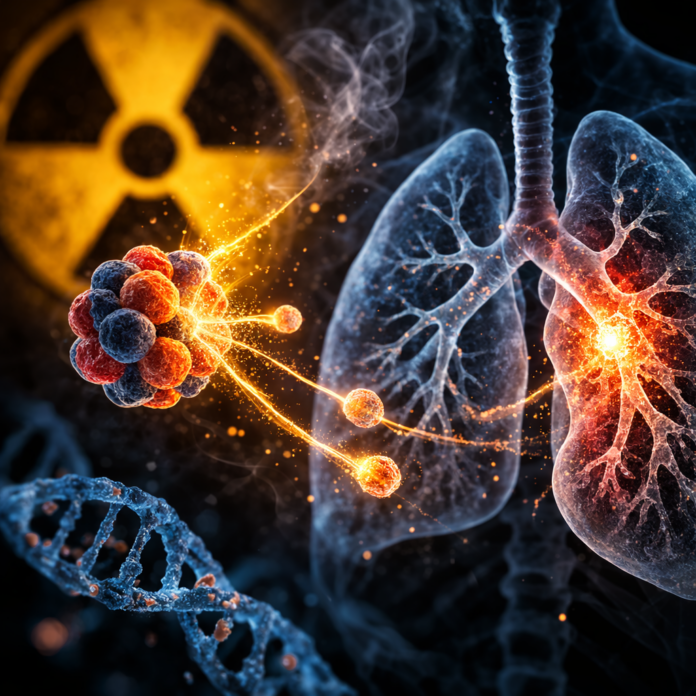
Alpha Radiation: Why It Matters So Much in Radon Exposure
Alpha radiation is one of those scientific terms that sounds frightening the moment you hear it. In a sense, that reaction is understandable. Alpha radiation is a form of ionizing radiation, which means it carries enough energy to knock electrons off atoms and damage living tissue. But the part many people do not realize is that alpha radiation is not equally dangerous in every situation. In fact, alpha particles are relatively easy to block outside the body. The real concern begins when alpha-emitting material gets inside the body through inhalation, swallowing, or in some cases a wound.
That distinction is exactly why alpha radiation matters so much in the radon world. Radon is a gas, but as it decays it forms radioactive progeny that emit alpha particles. Those particles can become a serious health concern when they are inhaled and deposited in the lungs. This is one of the main reasons radon is linked to lung cancer and why radon testing matters so much in homes. The danger is not just that radon is radioactive in an abstract sense. The danger is that its decay products can deliver alpha radiation directly to sensitive lung tissue.
For homeowners, this topic is worth understanding because it makes the radon message clearer. Alpha radiation helps explain why an invisible gas in the basement can become a major long-term health issue. It also explains why the phrase “radiation” is not always enough on its own. Different kinds of radiation behave differently. Alpha radiation is a perfect example of that. It can be stopped very easily from the outside, yet become highly significant when the source is internal.
Table of Contents
- What Is Alpha Radiation?
- How Alpha Particles Behave
- Why Alpha Radiation Is Different Outside vs. Inside the Body
- How Alpha Radiation Connects to Radon
- Why the Lungs Are the Main Concern
- Alpha Radiation vs. Other Types of Radiation
- What Homeowners Should Actually Take From This
- The Bottom Line
- Sources
What Is Alpha Radiation?
Alpha radiation is a type of particulate ionizing radiation. An alpha particle is made of two protons and two neutrons released from the nucleus of an unstable atom. In simple terms, it is essentially the nucleus of a helium atom without its electrons. Because of that structure, alpha particles are relatively heavy compared with other common forms of radiation and carry a positive charge. EPA and NRC both describe alpha particles this way in their radiation basics material.
Alpha particles are typically emitted by heavy radioactive elements such as uranium, radium, polonium, and related decay products. These are exactly the kinds of materials that show up in natural radioactive decay chains, including the radon decay chain. So while alpha radiation may sound like a specialized laboratory topic, it is actually a normal part of how certain radioactive elements break down in nature.
The key point is that alpha radiation is not a beam like light. It is not just energy floating abstractly through space. It is a physical particle released from an unstable atom. Because it is relatively large and heavy compared with other forms of ionizing radiation, it interacts strongly with nearby matter and loses energy quickly. That one fact explains both why alpha radiation is easy to stop and why it can be very damaging over a very short distance.
How Alpha Particles Behave
Alpha particles do not travel very far. NRC states that alpha particles can be blocked by a sheet of paper, the dead outer layer of skin, or even a few inches of air. EPA makes the same general point, explaining that alpha particles pose little to no direct external threat because they do not penetrate far. In other words, alpha radiation has low penetrating power.
That limited travel distance can make alpha radiation seem harmless at first glance. If a particle cannot even get through your skin, why worry about it? The answer is that while alpha particles do not travel far, they deposit a large amount of energy along the very short path they do travel. This makes them highly ionizing. They are good at causing intense localized damage where they stop.
This combination is what makes alpha radiation so important in health physics. It is weak as an external hazard in most routine situations because it cannot penetrate very far into the body from outside. But if the source is already inside the body, then the particle does not need to travel far at all. It is already next to the tissue it can damage. That is why alpha radiation is often described as a low-penetration but high-impact form of radiation.
So the basic behavior of alpha particles can be summed up like this: they are heavy, energetic, short-ranged, and highly damaging over that short range. That is the entire logic behind why they matter so much in internal exposure situations.
Why Alpha Radiation Is Different Outside vs. Inside the Body
This is the most important concept in the entire topic. Alpha radiation is usually not the main concern when the radioactive source is outside the body. EPA states that alpha particles pose no direct or external radiation threat in typical circumstances, and NRC similarly notes that external exposure to alpha particles generally does not pose a danger because they are so easily stopped. That means a person is not usually harmed simply by being near a small alpha source if the source stays outside the body and proper handling controls are in place.
Everything changes once alpha-emitting material is inhaled, swallowed, or otherwise enters the body. EPA explains that alpha-emitting materials can pose a serious health threat if inhaled or ingested, and NRC says the same. Once inside the body, the lack of penetration is no longer protective. Instead, the short travel distance concentrates the damage into a very small area of living tissue.
That is why alpha radiation is often more dangerous internally than externally. When an alpha-emitting particle is lodged in lung tissue, for example, the alpha emissions do not need to pass through skin or air. They are already at the target. The energy is released directly into nearby cells, where it can damage DNA and other cellular structures. Over time, enough of that damage can increase cancer risk.
This is also why context matters so much in radiation discussions. Saying “alpha radiation is dangerous” is incomplete. Saying “alpha radiation is dangerous when alpha-emitting material is inside the body” is much more accurate. The first statement creates fear. The second actually explains the hazard.
How Alpha Radiation Connects to Radon
Alpha radiation is central to the health risk from radon. CDC and ATSDR explain that the high-energy alpha emissions from radon deposited in the airways are the primary cause of toxicity concern. ATSDR also notes that when radon and its progeny undergo radioactive decay, some of those decays expel high-energy alpha particles, and those alpha emissions are the main source of health concern from radon exposure.
Radon itself is a naturally occurring radioactive gas formed from the decay of uranium and radium in soil, rock, and sometimes water. Once radon enters a home, it continues decaying into a series of other radioactive elements called progeny or decay products. Some of the most important of these progeny emit alpha particles. WHO explains that in indoor air, radon produces short-lived decay products that can attach to aerosol particles in the air or deposit on room surfaces.
This is where the radon hazard becomes more than just a gas issue. Radon gas may be inhaled and then exhaled, but the progeny it forms can attach to dust, smoke, and other airborne particles. Those particles can then be inhaled and deposited in the lungs. Once there, the alpha emissions from those decay products can irradiate nearby cells. WHO identifies the inhalation and deposition of short-lived airborne radon decay products in the airways as the critical step leading to alpha-particle irradiation of sensitive lung tissue.
So when people say radon causes lung cancer, alpha radiation is a large part of the mechanism behind that statement. The gas is the source, but the alpha-emitting progeny are a major reason the exposure becomes biologically harmful.
Why the Lungs Are the Main Concern
The lungs are the main organ of concern in radon exposure because inhalation is the most important route of exposure. WHO states that the most important route of exposure to radon and its decay products is inhalation. Once inhaled, some decay products can deposit in the respiratory tract, especially when attached to aerosols or smoke particles in indoor air.
ATSDR’s clinician guidance explains that the primary adverse health effect of increased radon exposure is lung cancer and specifically ties that risk to alpha emissions deposited in the airways. This is not just a general radiation effect. It is a location-specific problem. The particles are inhaled, deposited in the lungs, and emit alpha radiation in close proximity to the cells lining the respiratory tract.
The short range of alpha particles is actually part of why the lungs are vulnerable. Because alpha particles do not travel far, the tissue that gets hit is the tissue immediately adjacent to where the radioactive particle settles. In the case of radon progeny, that tissue is often lung tissue. The resulting concentrated radiation dose can damage DNA and contribute to the chain of changes that eventually lead to cancer.
This is also why smoking makes radon more dangerous. Smoke adds more particles to indoor air, giving radon progeny more surfaces to attach to and changing how they deposit in the lungs. The combined effect of smoking and radon exposure is especially harmful, which is why public health agencies repeatedly emphasize the much greater risk to smokers exposed to radon.
Alpha Radiation vs. Other Types of Radiation
It helps to compare alpha radiation to other common types of ionizing radiation. NRC notes that alpha and beta particles do not travel far and are relatively easy to block, while gamma rays, X-rays, and neutrons travel much farther and are more penetrating. This means different kinds of radiation create different kinds of hazards.
Alpha radiation has very low penetration but high ionization over a short path. Beta radiation can travel farther and in some cases can penetrate skin enough to cause injury. Gamma rays and X-rays are far more penetrating and can pass through the body, which is why shielding and distance matter so much with those forms. So alpha radiation is not the “strongest” radiation in every sense. It is simply very effective at damaging tissue when the source is internal and close to living cells.
This comparison matters because many people assume the most penetrating radiation is always the most dangerous. That is not automatically true. Danger depends on the type of radiation, the pathway of exposure, the location of the source, the amount of exposure, and the tissue involved. Alpha radiation is the best example of why that nuance matters. Outside the body, it is often less concerning. Inside the body, it can be a major health hazard.
For radon, this means the health risk is not based on dramatic penetration through the whole body. It is based on repeated microscopic damage in a very specific place: the respiratory tract.
What Homeowners Should Actually Take From This
For homeowners, the most useful lesson is not to memorize radiation physics. It is to understand why radon matters and why testing is essential. Alpha radiation explains the mechanism, but the action step remains practical and simple. Radon can enter a home from the ground. Its decay products can emit alpha particles. Those emissions can damage lung tissue over time if exposure is high enough and long enough. That is why EPA and CDC recommend testing homes for radon and taking action when levels are elevated.
EPA’s action level for radon remains 4 pCi/L, and CDC states there is no known safe level of radon exposure. Those recommendations make more sense once you understand alpha radiation. An elevated radon result is not just an abstract number. It is evidence that radioactive decay is occurring indoors and that alpha-emitting progeny may be forming in the breathing zone. :contentReference[oaicite:1]{index=1}
It also helps explain why radon mitigation works. The goal of mitigation is to reduce the amount of radon gas entering and accumulating inside the home. When you reduce the gas, you reduce the source that keeps generating alpha-emitting decay products indoors. That makes mitigation a direct way of lowering long-term alpha-radiation-related lung risk from radon.
So the homeowner takeaway is not to fear every mention of alpha radiation. It is to respect the context in which alpha radiation becomes important. Outside the body, alpha particles are usually easy to stop. Inside the body, especially in the lungs, they can matter a great deal. Radon is one of the clearest real-world examples of that principle.
The Bottom Line
Alpha radiation is a form of ionizing radiation made of heavy, positively charged particles containing two protons and two neutrons. It does not travel far and is easily stopped by paper, skin, or a short distance of air, which means it is usually not a major external hazard. But when alpha-emitting material is inhaled or swallowed, the story changes completely. Then the same short-range, high-energy behavior can cause concentrated damage to living tissue. :contentReference[oaicite:2]{index=2}
That is exactly why alpha radiation matters so much in radon exposure. Radon and its decay products can produce alpha emissions in the lungs, and those emissions are a primary reason radon is linked to lung cancer. Understanding alpha radiation does not change the practical advice for homeowners, but it does explain it. Test for radon, take elevated levels seriously, and reduce them when needed. :contentReference[oaicite:3]{index=3}
Sources
- U.S. Environmental Protection Agency: Radiation Basics
- U.S. Nuclear Regulatory Commission: Radiation Basics
- Centers for Disease Control and Prevention: Radon and Your Health
- Centers for Disease Control and Prevention: Testing for Radon in Your Home
- ATSDR / CDC: Clinician Brief on Radon
- ATSDR / CDC: Radon ToxFAQs
- WHO Guidelines for Indoor Air Quality: Radon
- U.S. Environmental Protection Agency: What Is EPA’s Action Level for Radon and What Does It Mean?