Radon and Air Purifiers: Can an Air Purifier Reduce Radon in Your Home?
Air purifiers are everywhere. If you have allergies, pets, wildfire smoke, or general indoor air quality concerns, a good purifier can help. But radon is different. Radon is a radioactive gas that enters from the soil and can build up indoors, especially on lower levels. It is one of the leading causes of lung cancer risk in non-smokers, and it typically has no short-term symptoms.
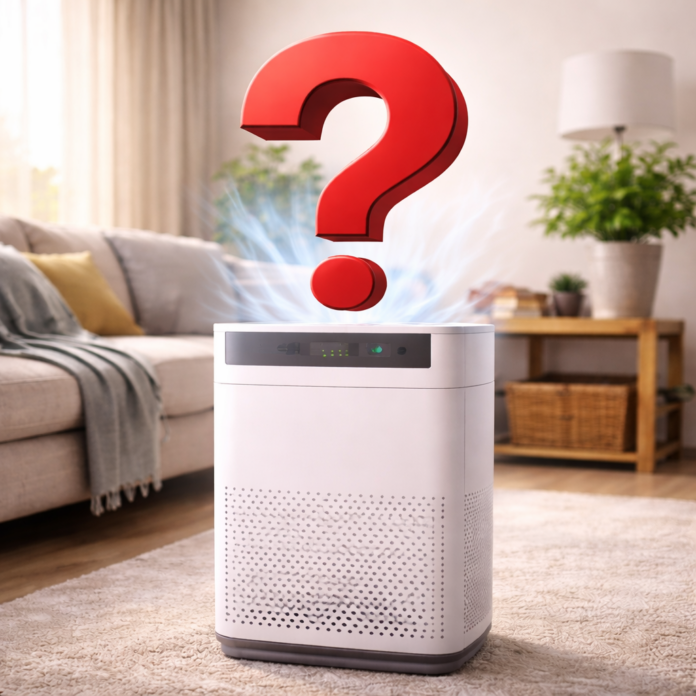
So the question comes up all the time: Can an air purifier remove radon or make radon safer?
The most accurate answer is this: an air purifier is not a radon mitigation solution. Most air purifiers do not remove radon gas, and even high-efficiency filtration that removes particles does not stop radon from entering the home or reduce the radon gas concentration that standard tests measure. In some cases, filtration may reduce some airborne radon decay particles (radon progeny), but major radon organizations and the EPA do not treat air cleaning as a reliable way to reduce radon health risk.
This article explains what air purifiers can and cannot do for radon, why “radon is a gas” matters, and what to do instead if your radon level is elevated.
Radon basics: why a gas is harder to “filter”
Radon is a naturally occurring radioactive gas produced by the decay of uranium in soil and rock. Outdoors, it usually dilutes quickly. Indoors, it can seep in through cracks and openings in foundations and build up.
When radon decays, it produces radioactive solid particles often called radon progeny or radon decay products. These particles can attach to dust and aerosols in the air. When inhaled, they can deposit in the lungs and deliver radiation as they continue to decay. That is a big part of the health risk.
Here is the key point for air purifiers:
- Radon itself is a gas.
- Radon progeny are particles.
Most residential air purifiers are designed to remove particles, not gases. That is why air purifiers can help with dust, pollen, and smoke particles, but they are not a direct solution for radon gas.
What “radon reduction” actually means
Radon reduction, as used in public health guidance, typically means reducing the radon gas concentration inside the home by preventing entry or venting radon from beneath the foundation. In the U.S., the EPA recommends fixing a home if the radon level is 4.0 pCi/L or higher, and also recommends considering action between 2.0 and 4.0 pCi/L because there is no known safe level and lower is better.
That matters because most radon test results, and most decision thresholds, are based on the radon gas concentration measured in indoor air.
Can HEPA air purifiers remove radon?
No. HEPA filters are excellent at capturing very small particles, but they do not capture radon gas in a meaningful way. The EPA states that air cleaners that do not contain special media (like activated carbon or alumina) will not remove gaseous pollutants, including radon.
However, there is a nuance that confuses people.
HEPA can reduce some radon progeny in the air
Some radon progeny attach to airborne particles. A HEPA purifier can remove a portion of those particles from the air in the room it is operating in. That means a HEPA unit may reduce some airborne radioactive particle concentration in that space.
But there are major limitations:
- It does not reduce the radon gas concentration.
- Radon gas continues to decay, continuously producing new radon progeny.
- The effect is limited to the air volume being filtered, not the whole home unless you run multiple units or whole-house filtration.
Why major radon groups do not recommend filtration as mitigation
AARST, a leading radon standards organization, published a position paper explaining that high-efficiency filtration can reduce radon progeny in air but does not affect radon gas concentration. It also points out that filtration changes particle size distribution in ways that could change how progeny deposit in the lung, creating uncertainty about true health risk reduction. AARST does not support using HEPA or other high-efficiency filtration as a method to reduce the health risk associated with radon exposure and agrees that the best approach is preventing radon entry.
The EPA also states that the effectiveness of air cleaners in reducing health risks from radon progeny cannot be adequately evaluated at present. In other words, even if you reduce certain airborne particles, translating that into a predictable reduction in health risk is not straightforward.
What about activated carbon filters?
Activated carbon can adsorb certain gases and odors. Some people assume that because carbon is used for gases, it must remove radon. In theory, carbon can adsorb radon. In practice, most consumer air purifiers contain a relatively small amount of carbon and move a lot of air through it quickly. That combination is not ideal for significant radon gas removal.
Practical issues with carbon filters for radon include:
- Carbon mass is usually too small. A thin carbon pad is not the same as a large carbon bed designed for gas capture.
- Contact time is too short. High airflow reduces the time radon has to adsorb.
- Saturation happens. Carbon also loads with other indoor gases and odors, reducing effectiveness.
- Radon is continuously entering and decaying. Even if some radon is captured, the source is not controlled.
The result is that carbon in typical residential purifiers should not be treated as a reliable way to lower radon gas levels. It may help with odors and some VOCs, but radon is not a realistic target for most consumer carbon filters.
Ionizers and ozone “air cleaners” are a bad direction
Some devices marketed as air purifiers use ionization or ozone generation. People sometimes buy these thinking they will solve “everything,” including radon.
This is not a good strategy. The EPA warns that ozone generators sold as air cleaners intentionally produce ozone, a lung irritant. Ozone can cause respiratory symptoms and worsen conditions like asthma. The EPA does not consider ozone generators a safe or effective solution for indoor air quality in occupied spaces.
Even if you are focused on radon, adding an indoor lung irritant to the environment is not what you want.
Will an air purifier lower your radon test result?
Usually, no, at least not in a meaningful way. Standard radon tests and most professional devices measure radon gas concentration. HEPA filtration does not remove radon gas, so the radon number typically does not change because of a purifier.
A purifier could potentially reduce some particle-bound progeny in a room, but your radon test result is still primarily reporting radon gas concentration. That is why people often run a purifier for weeks and still see the same radon reading on a monitor.
So are air purifiers useless if you have radon?
No. They can still be useful, but for the right reasons.
An air purifier can help with:
- Dust and allergens
- Smoke particles
- Pet dander
- General particulate reduction, especially in rooms with heavy occupancy
In a radon context, a purifier may be a reasonable supporting tool for indoor air quality, but it should not be used as a substitute for radon mitigation when levels are elevated.
What to do instead if your radon is elevated
If your radon test is elevated, focus on steps that reduce radon gas concentration, not only indoor particles.
If your level is 4.0 pCi/L or higher
EPA guidance recommends fixing the home. The most common and reliable approach is typically an active soil depressurization system (often called sub-slab depressurization for basement and slab homes). This approach vents radon from beneath the foundation and reduces indoor concentration.
If your level is between 2.0 and 4.0 pCi/L
EPA recommends considering action. A long-term test can help you estimate your true average exposure. If you spend lots of time on the lowest level, work from home, or have smoking history in the household, it can make sense to reduce radon in this range as well.
Ventilation is temporary, not mitigation
Increasing airflow by opening windows can reduce radon temporarily, but the CDC notes that natural ventilation should not be considered radon mitigation because it is only a temporary strategy. It can be a short-term step while you plan a permanent fix, but it is not a reliable long-term solution.
A realistic “best practice” approach
If you want a simple, practical plan that avoids the common mistakes:
- Test for radon and confirm the result appropriately (short-term plus long-term if needed).
- Mitigate if elevated, especially at or above 4.0 pCi/L.
- Retest after mitigation to confirm performance.
- Use an air purifier if you want better general air quality, but do not treat it as radon control.
- Avoid ozone-generating devices in occupied spaces.
Bottom line
Air purifiers are not a reliable way to reduce radon gas in a home. HEPA filters do not remove radon gas, and while filtration may reduce some airborne radon progeny in limited conditions, major radon guidance does not treat air cleaning as a dependable method to reduce radon health risk.
If your goal is radon risk reduction, focus on what works: test accurately, mitigate elevated levels by reducing radon entry or venting it from beneath the home, and retest to confirm. Use air purifiers as a separate tool for particle-related indoor air quality, not as radon mitigation.
Sources
- U.S. Environmental Protection Agency (EPA) – Will air cleaners reduce health risks?
- U.S. Environmental Protection Agency (EPA) – What is EPA’s action level for radon and what does it mean?
- Centers for Disease Control and Prevention (CDC) – Reducing radon levels in your home
- EPA – Consumer’s Guide to Radon Reduction: How to Fix Your Home (PDF)
- EPA – A Citizen’s Guide to Radon (PDF)
- AARST – Position paper on HEPA filtration and radon progeny (PDF)
- U.S. Environmental Protection Agency (EPA) – Ozone generators that are sold as air cleaners